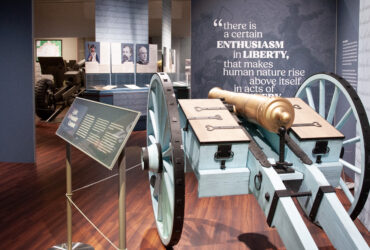
Hamilton’s 5th Field …
Special exhibit tracing the incredible journey of the U.S. Army’s oldest active unit.
Learn More
First in War: World War I
During World War I, the First Division fought across France in five noteworthy battles and played an …
Learn More
Letter from Alexander Hamilton to …
Learn More
Edward Muhlenberg Letter
Learn More
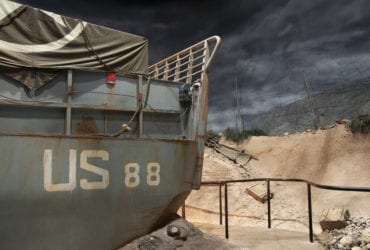
First in War: World War II
Follow the 1ID through World War II from North Africa to the Liberation of Europe.
Learn More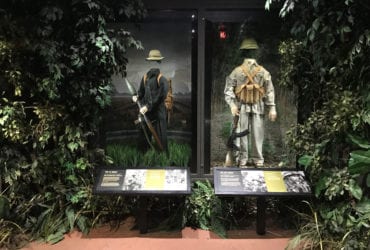
First in War: Vietnam
Learn about the complexities associated with the two types of enemy Big Red One soldiers would face.
Learn More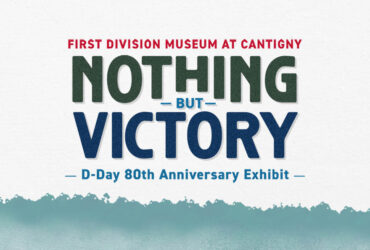
Nothing But Victory
This fusion of art and history begins with a captivating visual story measuring 300 yards.
Learn More William Ennis Letter
Learn More
Jerome E. Pankow Letter
Learn More
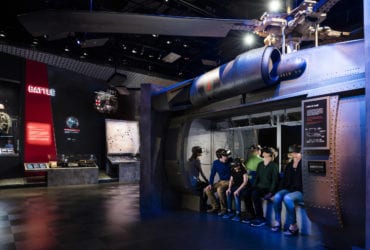
Duty First: Battle
First Division soldiers train constantly for all aspects of battle—from combat to deployment, logist …
Learn More Ray L. Figenscher Letter
Learn More

Duty First: Counterinsurgency
Soldiers must find and defeat unknown enemies while also winning the trust of local people.
Learn More