
In Their Words
Warfare in the Trenches
Trench warfare is synonymous with World War I. The crowded, mud-filled dugouts and the maze-like trenches of the front saw many of the key battles of the war. The trenches served as both barracks and frontline for many soldiers of the First Division. The Great War was never intended to be fought from the stalemate and confines of trenches. The commanders on both sides envisioned a quick war of movement with offensive operations taking place over open ground. The ideas of movement and a short war quickly vanished as the war became a stalemate by the winter of 1914. New forms of weapon technology emerged just prior to the outbreak of the war that forced a major change in battlefield tactics. The use of artillery, barbed wire and machine guns by both sides brought offensive movement on the Western Front to a swift halt. Machine guns had a large impact on the creation of trench defenses due in part to their deadly rapid fire. Soldiers dug into the earth to escape the waves of bullets generated by machine guns. Entrenched infantry armed with rifles and machine guns seemed relatively invincible to attack from an exposed enemy. An attack against such a fortified position typically resulted in a high number of casualties for the attacker. As a result, the types of movement emphasized were massed infantry charges, nighttime trench raids, and attempts to outflank by means of building a longer and more complex trench line than that possessed by the opposing force.
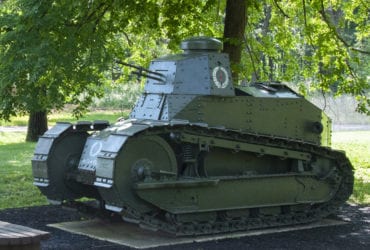
The arrival of the American Expeditionary Force in France in 1917 coincided with the beginning of change from the stalemate of trench warfare back to the war of movement originally visualized by Allied commanders. A.E.F. commander General John “Blackjack” Pershing strongly advocated a return to open warfare. He ordered the newly arrived U.S. troops to undergo training that focused on maintaining a “vigorous offensive” when they entered combat. Although technology initially forced soldiers to dig-in, it also came to eventually provide ways of effectively fighting outside of the protection offered by trenches. Light machine guns, portable mortars, rifle grenades, aerial reconnaissance, and even the first tanks helped to break the stalemate of the trenches. These new advances in military technology effectively allowed soldiers to operate relatively protected on open ground or endowed them offensive capabilities that could readily overcome enemy defenses. Despite such advances and the movement away from the static fighting that characterized the early years of the Great War, trenches remained an integral part of the Doughboy’s experience, whether as a permanent defensive position or the launching point for a large-scale offensive.
The rough conditions of the trenches tried the men of the First Division and proved to turn any task into a difficult chore. Often cold, wet, cramped and rat infested, the realities of trench life caused many soldiers to become ill from exposure or any one of the variety of diseases produced from such conditions; most commonly dysentery, typhus, cholera and fungal infections such as trench foot. Exterior threats, such as infantry charges and artillery barrages, were always present. Yet, given the terrain, opposing forces and the prevailing military doctrine of the time, U.S. soldiers found that the trenches themselves were a necessity and diligently dug and maintained them throughout the extent of the war. From their first experience during training and the cold winter of the Sommerviller Sector in late 1917, to the final push at the Meuse-Argonne in September 1918, trenches were everywhere and played a key role in the victories, defeats and history of the First Division during World War I.